Miriam is 47. She teaches at a primary school in Birkirkara, and last month her GP said something that has been sitting in her mind ever since. Her BMI was 26, technically just inside the normal range, but her doctor paused, measured her waist, and mentioned her abdominal area. Not in a frightening way. Just a quiet note that visceral fat accumulation is something worth paying attention to. Since then, Miriam has been reading. The word "visceral" keeps coming up, and the articles keep...
Miriam is 47. She teaches at a primary school in Birkirkara, and last month her GP said something that has been sitting in her mind ever since. Her BMI was 26, technically just inside the normal range, but her doctor paused, measured her waist, and mentioned her abdominal area. Not in a frightening way. Just a quiet note that visceral fat accumulation is something worth paying attention to.
Since then, Miriam has been reading. The word "visceral" keeps coming up, and the articles keep oscillating between clinical language she can't quite follow and alarming headlines that leave her anxious rather than informed. She's not panicked. She just wants to understand what's actually happening in her body and whether there's something sensible she can do about it here in Malta.
This post is for Miriam. And for every woman who has had a similar conversation in a GP surgery and walked away with more questions than answers.
Visceral fat is not the same as the fat you can see or feel. Understanding that difference is where clarity begins.
[Image: Muscle Stimulation]
What Is Visceral Fat and How Is It Different From Subcutaneous Fat? Most people think of body fat as one thing. It isn't. There are two distinct types, and they behave very differently in the body.
Subcutaneous fat is the fat stored just beneath the skin. You can pinch it. It sits on your hips, thighs, upper arms, and abdomen surface. It's the fat that might cause you to feel self-conscious in a swimsuit, but from a medical standpoint, it is relatively inert. It stores energy and provides some insulation. It is not the fat your doctor is most concerned about.
Visceral fat sits deeper. It wraps around your internal organs: the liver, pancreas, intestines, within the abdominal cavity. You cannot see it or pinch it. A slim-looking abdomen can contain high levels of visceral fat, and a visible rounded belly can be predominantly subcutaneous. The two don't always correlate the way people expect.
What makes visceral fat clinically significant is that it is metabolically active. It releases inflammatory compounds, disrupts hormonal signalling, and impairs the liver's ability to process glucose and fats. Research published in Nature by Despres and Lemieux (2006) identified visceral adiposity as an independent cardiovascular risk factor, separate from overall body weight. This is why your waist measurement and your BMI can tell different stories. A doctor who measures both is doing something meaningful.
Visceral fat is sometimes referred to as "active fat" in the research literature, not because it does something useful, but because it is chemically busy in ways that subcutaneous fat is not.
Why Women Accumulate More Visceral Fat After 40 This is not a willpower story. It's a hormonal one.
Before menopause, oestrogen plays a significant role in directing where the female body stores fat. Oestrogen tends to favour subcutaneous storage in the hips and thighs, the classic "pear shape" that is hormonally protective. Lovejoy et al. (2008) documented this clearly: as oestrogen levels decline during perimenopause and menopause, fat redistribution shifts from the periphery toward the abdomen and visceral depots.
This is why women who maintained a consistent weight and shape for decades can notice a sudden shift in their early-to-mid 40s. The number on the scale may not change dramatically. The distribution does. The waist thickens. The abdomen rounds. And often it seems to happen despite eating and exercising in the same way they always have.
Cortisol is another driver. Research by Epel et al. (2000) found a direct link between chronic stress and visceral fat accumulation in women. The stress hormone cortisol promotes the mobilisation and redistribution of fat to the abdominal region. For women managing work, family, financial pressure, and the physiological stress of hormonal transition, all at once, this is not a minor variable.
Poor sleep, insulin resistance, and sedentary patterns compound the effect. Malta has the highest overweight and obesity prevalence in the EU according to Eurostat 2022 data. A diet rich in refined carbohydrates, from pastizzi and ftira to the social eating culture that is genuinely part of Maltese life, combined with increasingly desk-based work, creates conditions where visceral accumulation is particularly common.
None of this is blame. It is context. Understanding why something is happening is the first step toward addressing it with the right tools.
The Health Implications of High Visceral Fat: What the Evidence Actually Says The research here is worth knowing, presented calmly rather than as a reason to panic.
Visceral fat is associated with increased risk of type 2 diabetes, cardiovascular disease, high blood pressure, non-alcoholic fatty liver disease, and certain inflammatory conditions. This is well-established in the literature. Romero-Corral et al. (2010) described a phenomenon called "normal-weight obesity": individuals with a healthy BMI but elevated body fat and visceral accumulation who carry metabolic risk profiles closer to obese individuals than lean ones. Miriam's doctor was not being alarmist. He was being thorough.
What is equally important to understand is that visceral fat is responsive to intervention in a way that some other health markers are not. It tends to be more metabolically dynamic than subcutaneous fat, which means it responds meaningfully to the right kind of activity, dietary change, and sleep improvement. It is not irreversible. It is addressable.
Knowing your risk is not the same as being at the mercy of it.
How Is Visceral Fat Measured? This is a question Miriam will likely have after her GP appointment, and it's worth answering directly.
The most accessible clinical indicator is waist circumference. The World Health Organisation sets the threshold for women at 80 cm or above as indicating elevated visceral fat risk. It's a simple, inexpensive, and reasonably accurate screening tool. That's why your GP reaches for a tape measure rather than just the scales.
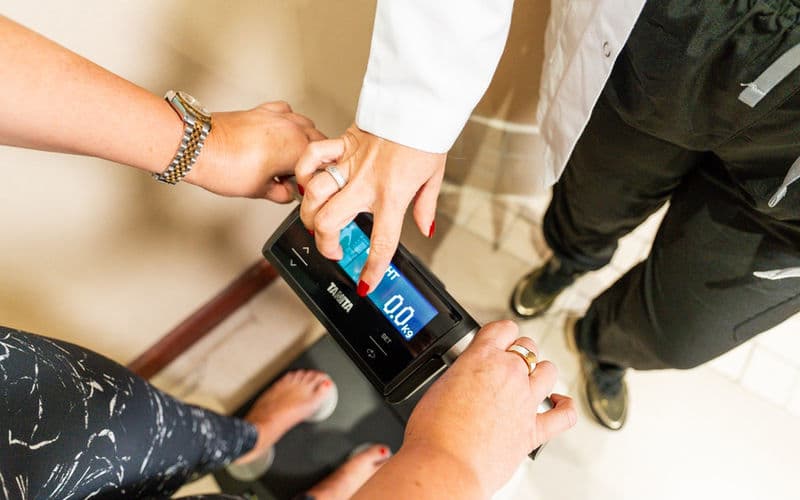
For greater precision, body composition scanning can differentiate between subcutaneous and visceral fat stores. At our Malta clinic, we use body composition analysis as part of the initial assessment for women who want to understand their metabolic picture in detail, not just their overall weight.
MRI and CT imaging provide the most accurate visceral fat quantification, but these are research tools rather than clinical routine. For most women, waist circumference combined with body composition assessment gives sufficient clarity to make informed decisions.
What Actually Reduces Visceral Fat: Evidence-Based Strategies Aerobic exercise is the most studied intervention. Tjonna et al. (2008) demonstrated that high-intensity aerobic training produced significant reductions in visceral fat, independent of changes in total body weight. In some studies, visceral fat reduced measurably even when the scale didn't shift much. Walking, cycling, swimming, and interval-style movement all contribute. The key is consistency and sufficient intensity, not extremity.
Dietary adjustments that reduce insulin load have a strong evidence base. Refined carbohydrates and added sugars drive insulin spikes that promote fat storage, particularly in the visceral compartment. This does not mean eliminating pastizzi from your life permanently. It means understanding that what you eat daily creates a hormonal environment, and adjusting that environment is within reach. A medically supervised weight loss Malta approach will assess your specific patterns rather than applying a generic template.
Sleep quality matters more than most people realise. Short or disrupted sleep elevates cortisol and ghrelin, the hunger-promoting hormone. Seven to nine hours of quality sleep is not a luxury recommendation. It is metabolically functional advice.
Stress management has a direct visceral fat connection, as Epel's research makes clear. This is not about telling you to "relax more" as though that were simple advice. It means recognising that for women in perimenopause carrying elevated cortisol loads, stress management is a genuine physiological intervention, not just self-care language.
Results may vary for each individual based on baseline health, hormonal status, and which factors are most dominant in their particular picture. A slimming programme Malta that accounts for this individually is meaningfully different from a generic diet plan.
How Carisma Slimming Malta Addresses Visceral Fat in Women One question that comes up often is whether body contouring treatments, fat freezing, fat reduction Malta technologies, cryolipolysis, can target visceral fat. The honest answer is no, and it's important to be clear about this.
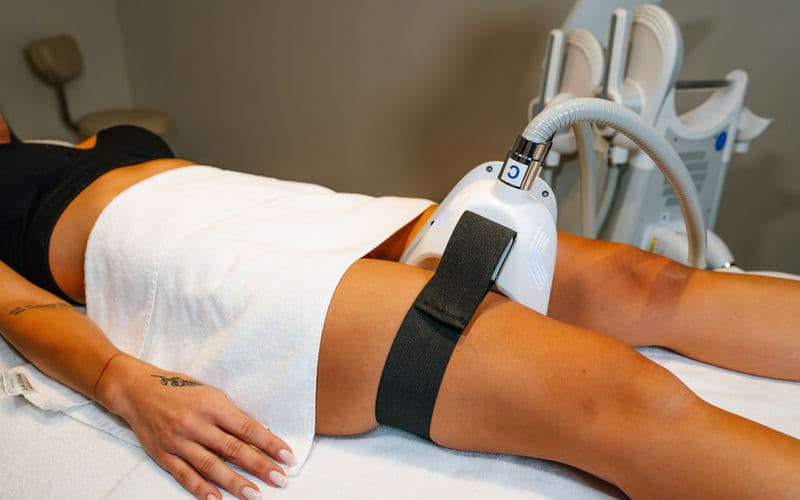
Body contouring treatments work on subcutaneous fat, the fat layer beneath the skin that you can pinch and feel. They are not able to reach or affect visceral fat, which sits deep within the abdominal cavity around the organs. Any clinic that suggests otherwise is not being accurate with you.
What we do offer at Carisma Slimming is something different: a medically supervised programme that addresses visceral fat through the interventions that actually work. Body composition analysis, nutritional guidance calibrated to hormonal stage, activity recommendations, and where clinically appropriate, medical options including GLP-1 therapies that have demonstrated visceral fat reduction in peer-reviewed trials.
Our approach starts with understanding your picture specifically. Not your neighbour's picture. Yours. Women at 47 in perimenopause present differently from women at 35 postpartum or women at 55 post-menopause. The programme is built around that difference, not despite it.
We are not offering a shortcut. We are offering a structure that fits your actual biology.
Results may vary for each individual. What we can offer is clarity, appropriate tools, and consistent support at every stage.
If you'd like to understand your own picture, book a free slimming consultation at our Malta clinic. The first conversation costs nothing.
FAQs About Visceral Fat in Women in Malta Can you see or feel visceral fat from the outside? Not directly. Visceral fat is stored deep within the abdominal cavity, around organs like the liver and intestines. It cannot be pinched or felt from the surface. A rounded abdomen can indicate visceral accumulation, but it is not a reliable visual indicator on its own. Someone may carry significant visceral fat with a relatively flat stomach, while another person's visible belly may be predominantly subcutaneous. Waist circumference measurement and body composition scanning provide a more accurate picture than visual assessment alone.
How quickly can visceral fat be reduced with the right approach? Visceral fat tends to respond to intervention faster than subcutaneous fat, which is one of the few advantages of its metabolic activity. With consistent aerobic exercise, dietary adjustments targeting insulin load, and improved sleep, measurable reductions can occur within eight to twelve weeks. The timeline varies for each individual depending on hormonal status, starting levels, and how consistently the approach is applied. A medically supervised programme provides regular tracking so you can see what is actually shifting, not just what the scale says.
Does fat freezing or body contouring treat visceral fat? No. This is one of the most important distinctions to understand. Fat freezing, cryolipolysis, and body contouring technologies work on subcutaneous fat, the fat layer directly beneath the skin. They cannot reach visceral fat, which sits deep within the abdominal cavity around the organs. These treatments are effective for subcutaneous fat reduction and body shaping. For visceral fat, the evidence-based approaches are aerobic exercise, dietary intervention, and, in some cases, medically supervised pharmacological support.
Should I see a doctor if I have high visceral fat? Yes. Visceral fat is a meaningful metabolic marker and a conversation worth having with a qualified professional. This does not mean an emergency. It means appropriate awareness. A GP can perform a waist measurement and refer you for further assessment if indicated. At our Malta clinic, we offer an initial consultation where we can review your body composition and discuss whether a medically supervised programme is appropriate for your specific situation. You are not obliged to do anything after that conversation. But having it is worth the time.
Your Doctor Was Right to Mention It, and You Were Right to Look Into It Miriam's GP did not say anything frightening. He measured something, noted it, and trusted her to be an adult who could handle information. That's good medicine.
And Miriam did what any sensible person does: she researched. She didn't spiral. She looked for clarity.
Visceral fat is not a life sentence. It is a signal from your body, your hormones, your life circumstances, that something in your current pattern is worth adjusting. The women who do best with this are not the ones who treat it as an emergency. They're the ones who treat it as information, find a structure they can sustain, and move through it consistently rather than dramatically.
If you've had a similar conversation at a GP appointment, or if you've noticed a shift in your abdomen over the past few years that doesn't match what you'd expect from your diet and activity level, you now have a clearer picture of why.
The next step, if you'd like to take it, is a free consultation at Carisma Slimming. No sales pressure. No weigh-in at the door. Just a conversation about what's happening in your body and what's actually available to address it here in Malta.
Book your free slimming consultation.
More from the blog